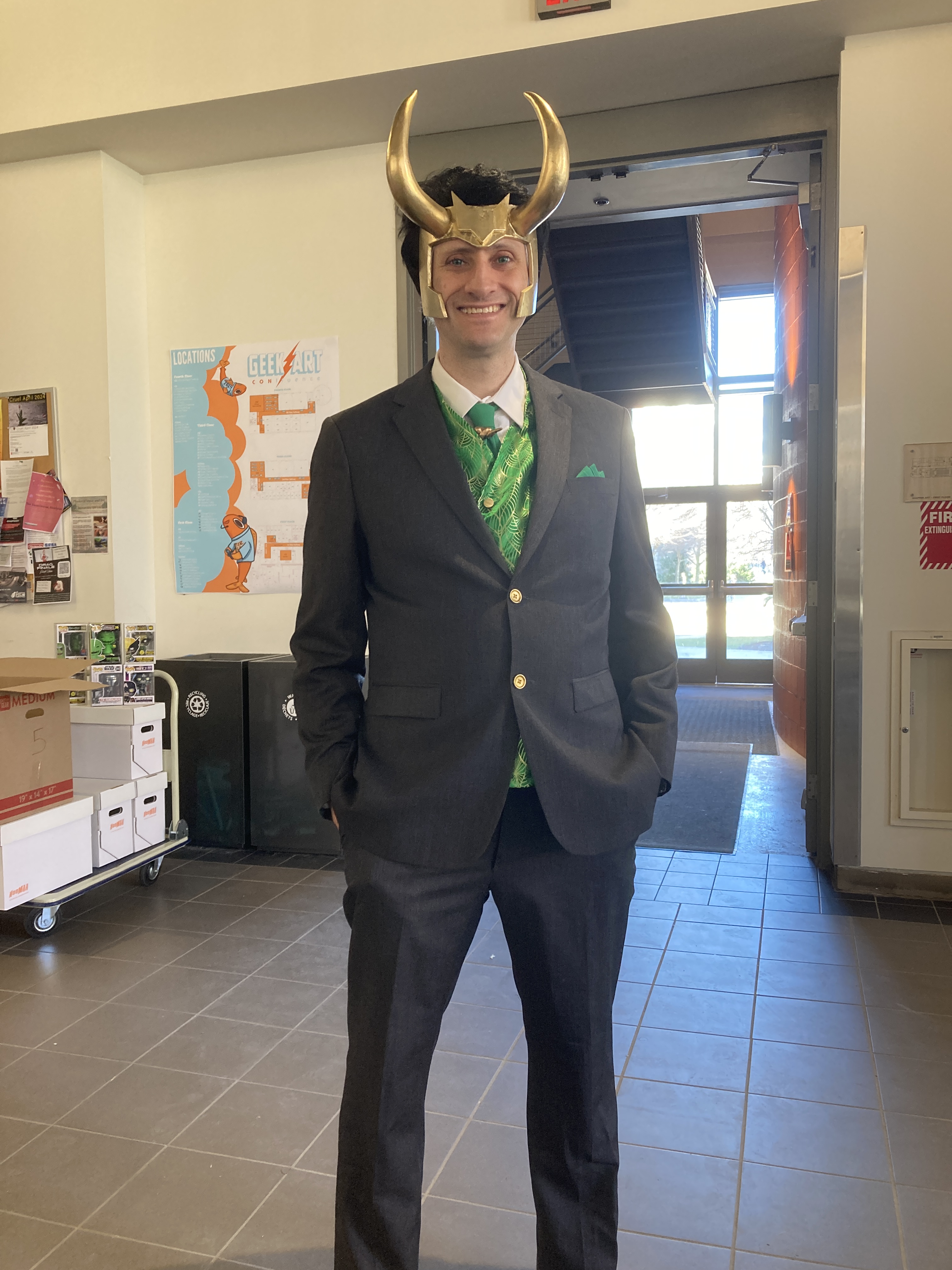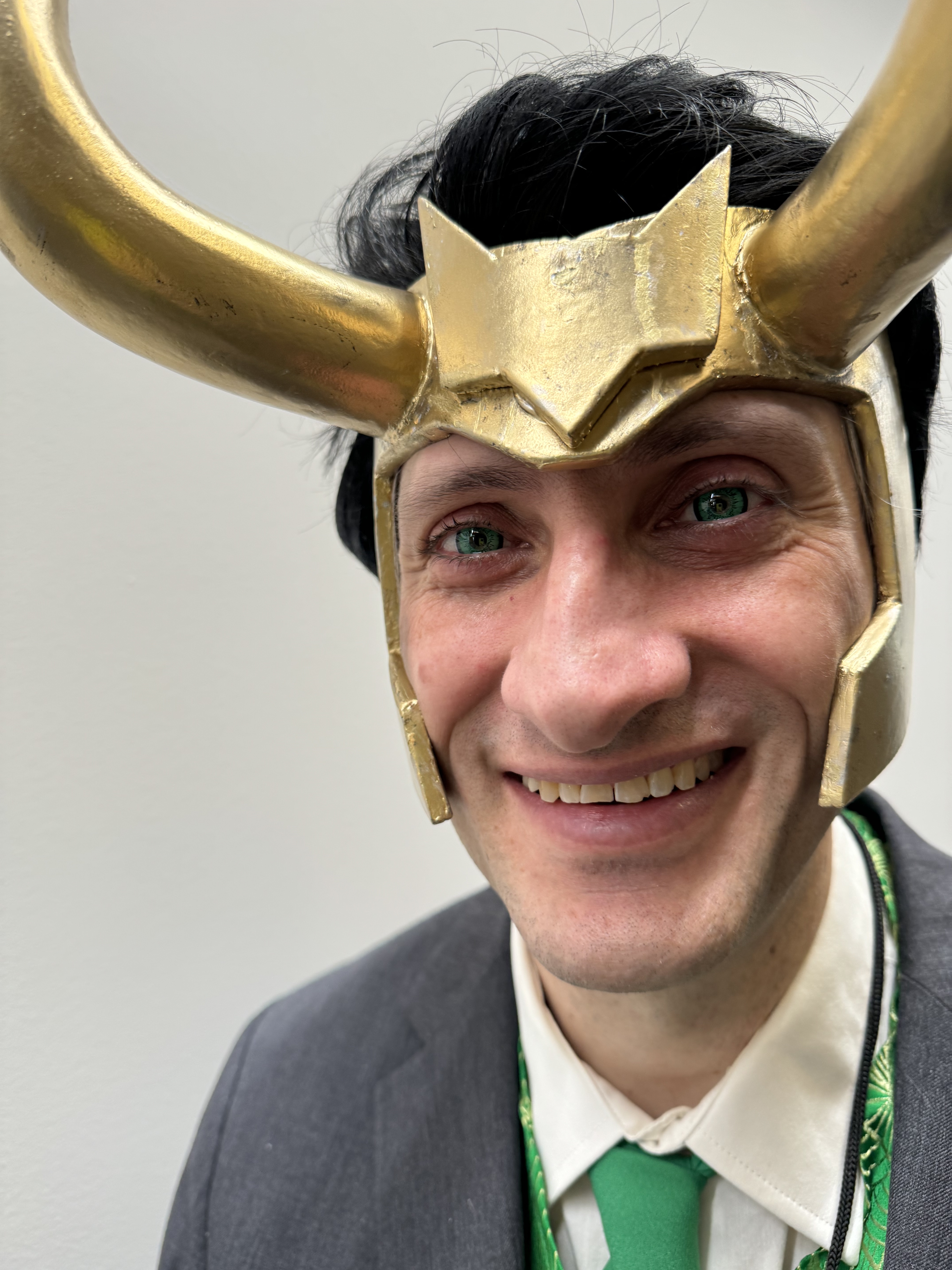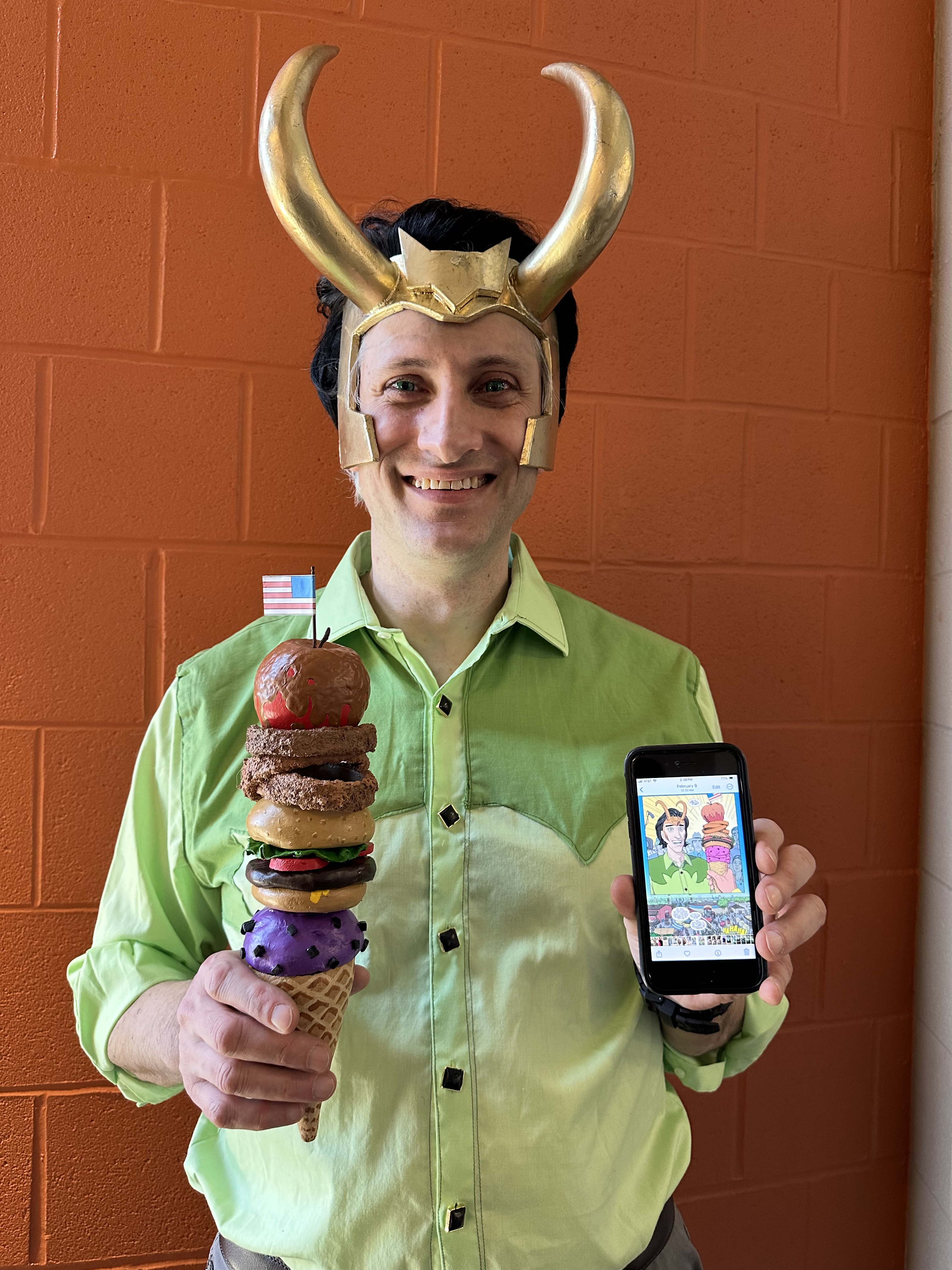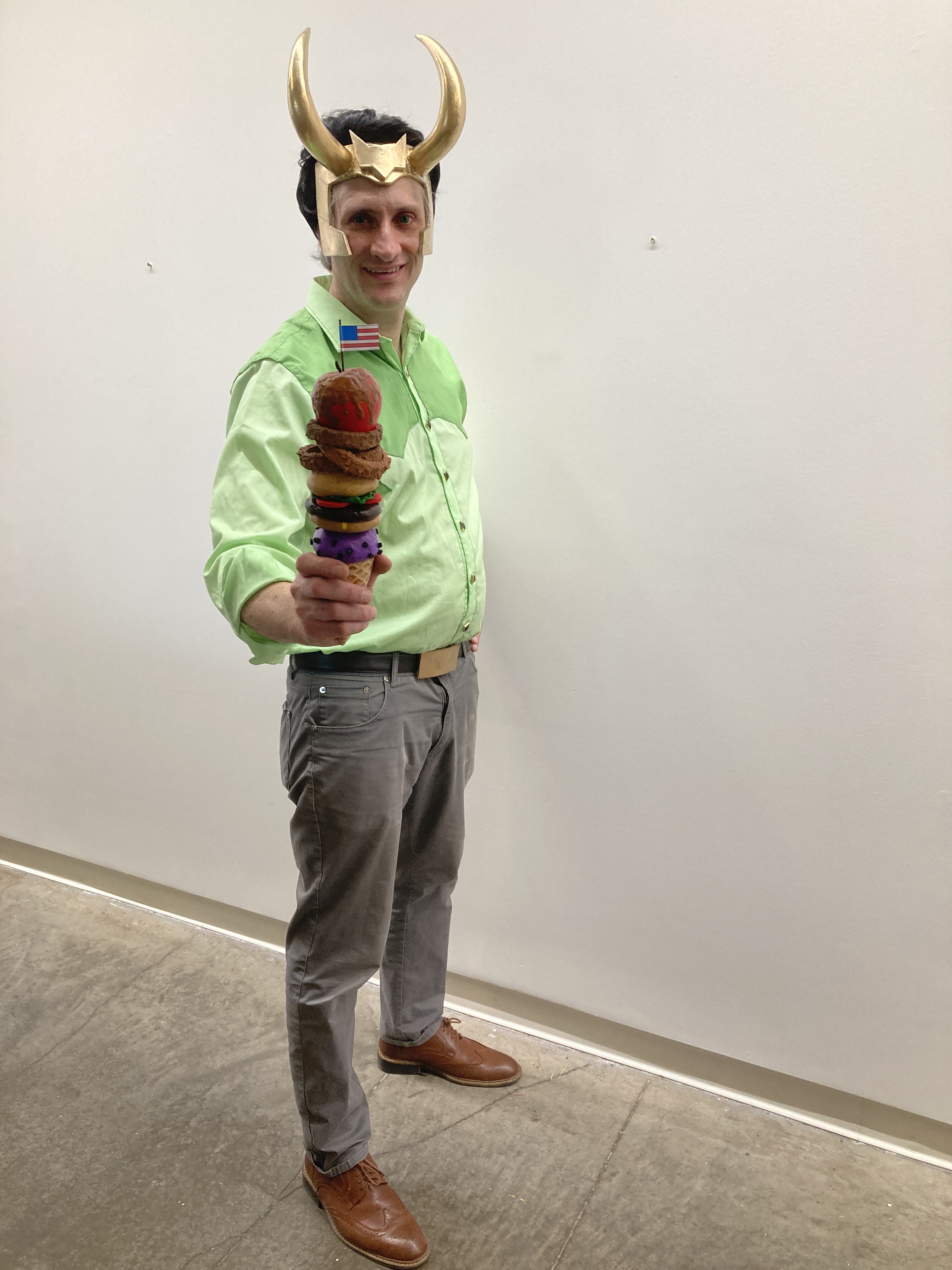
Vote Loki! Variants Cosplay

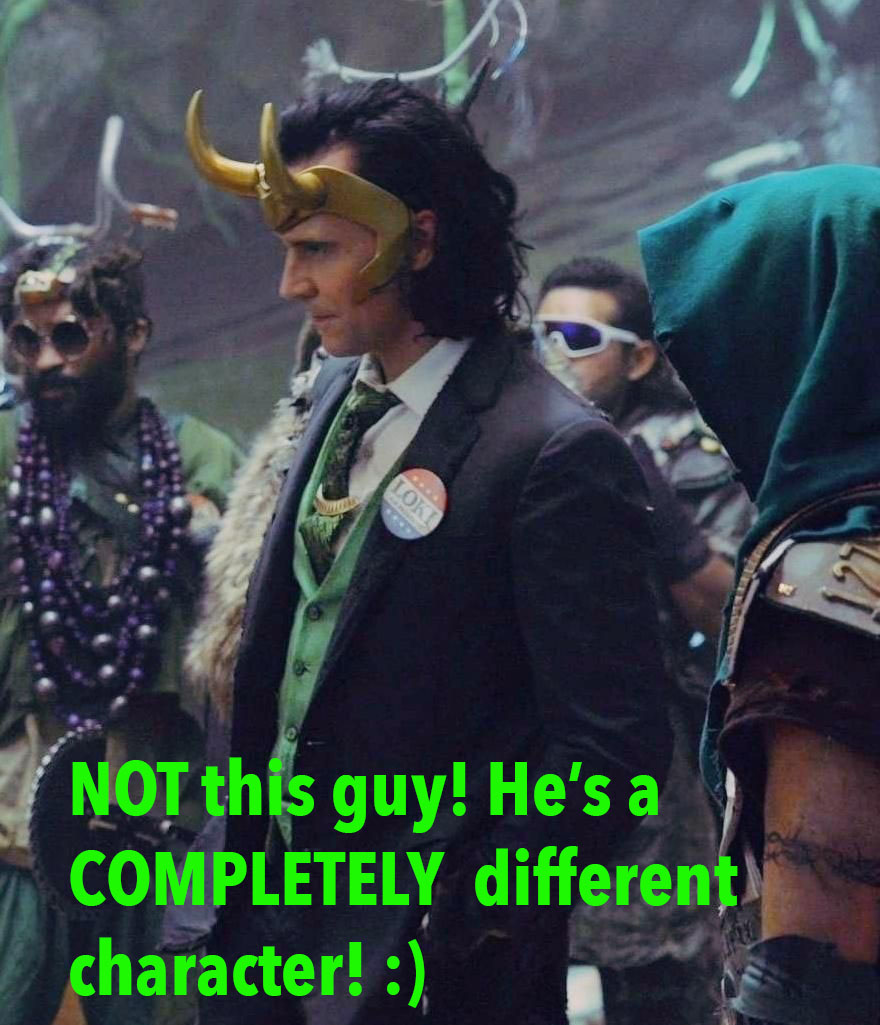
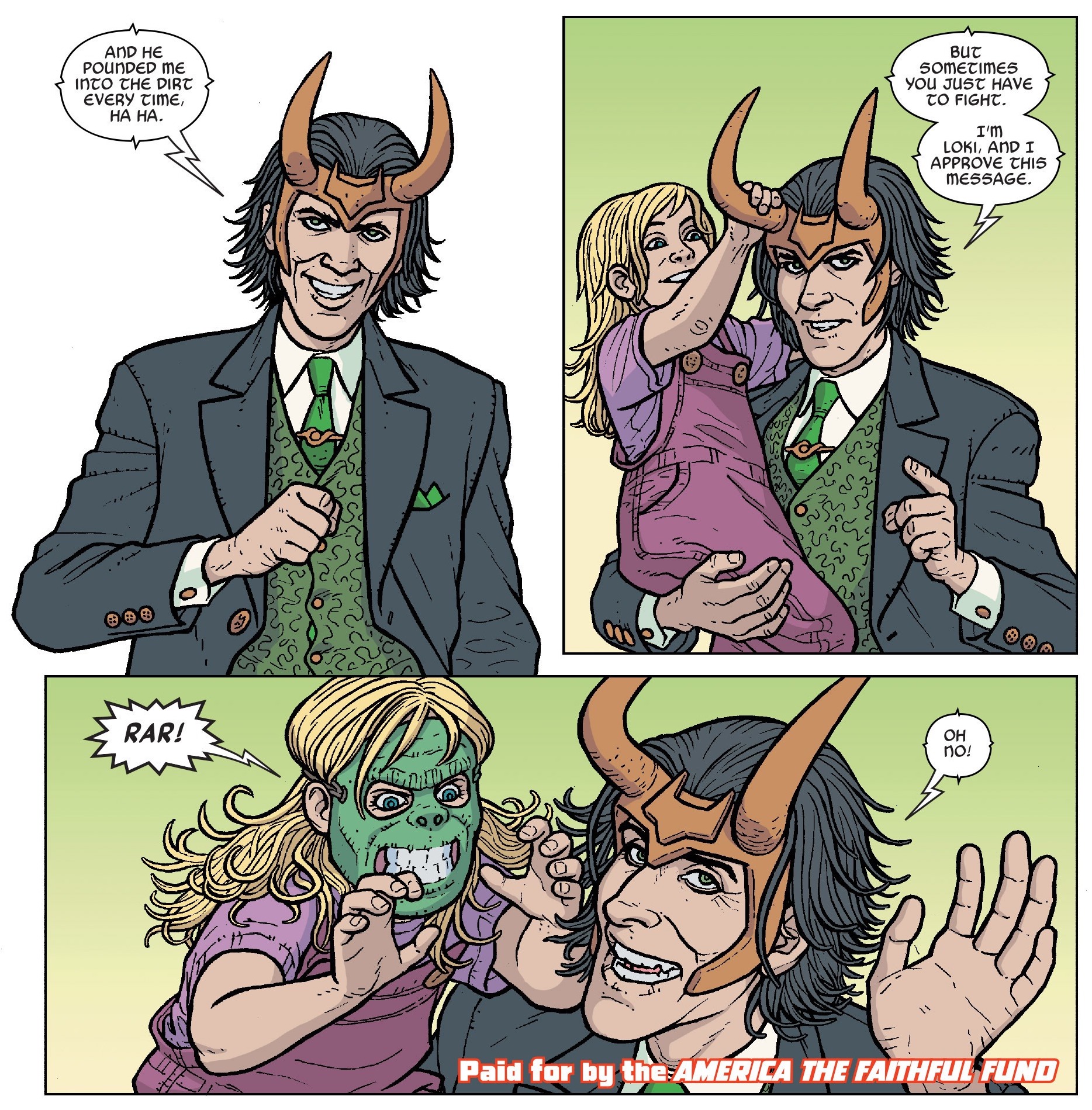
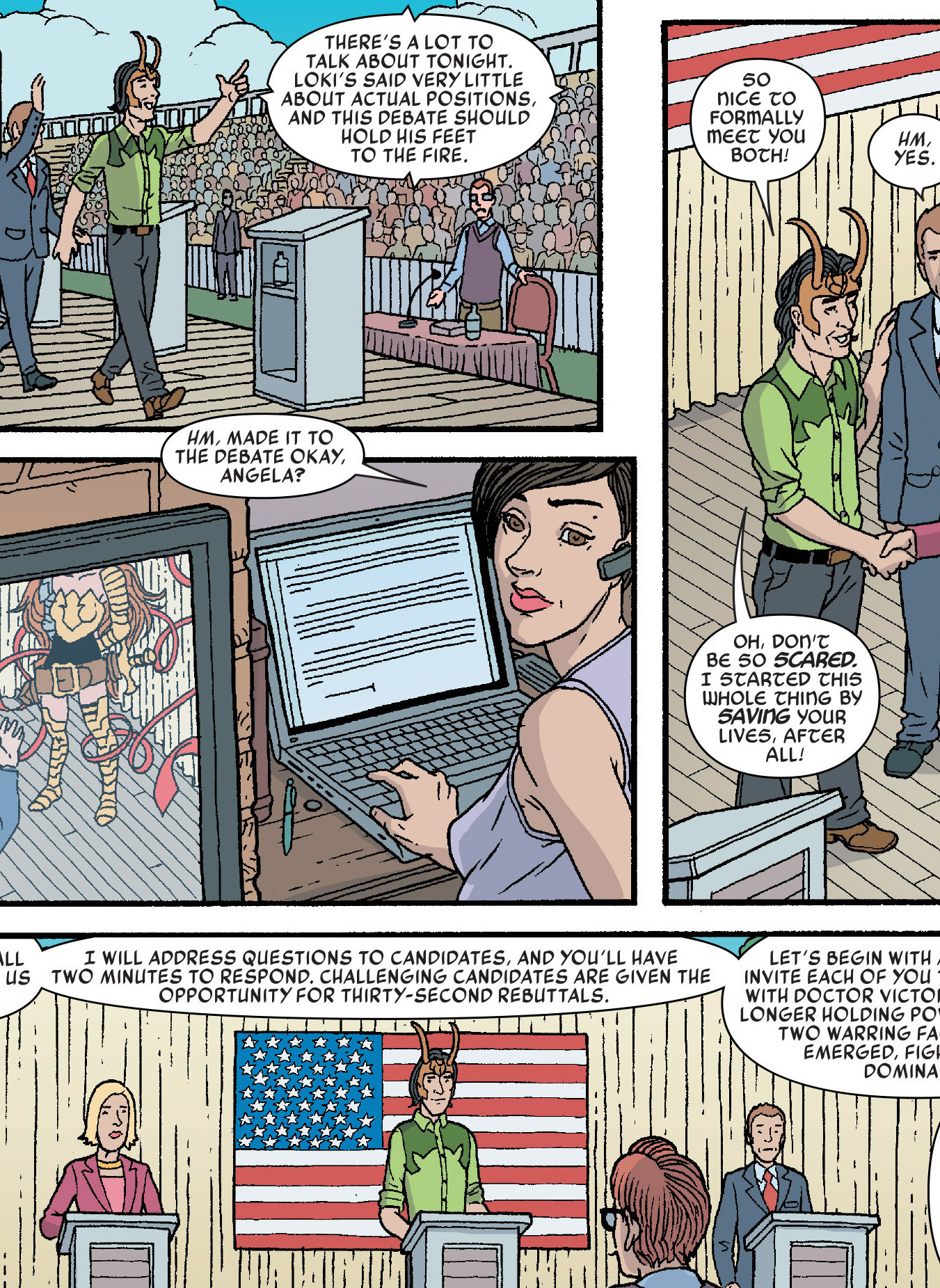
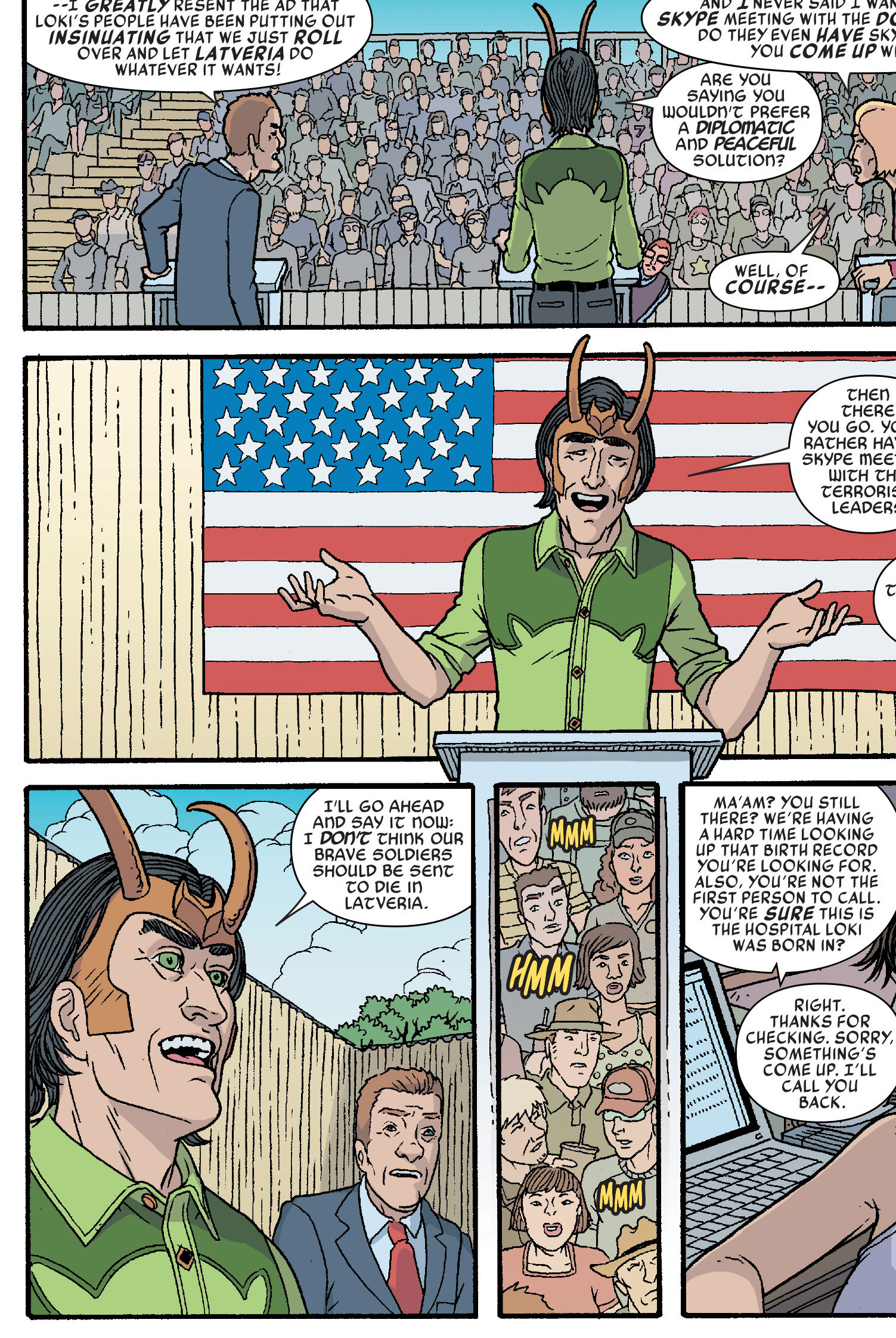
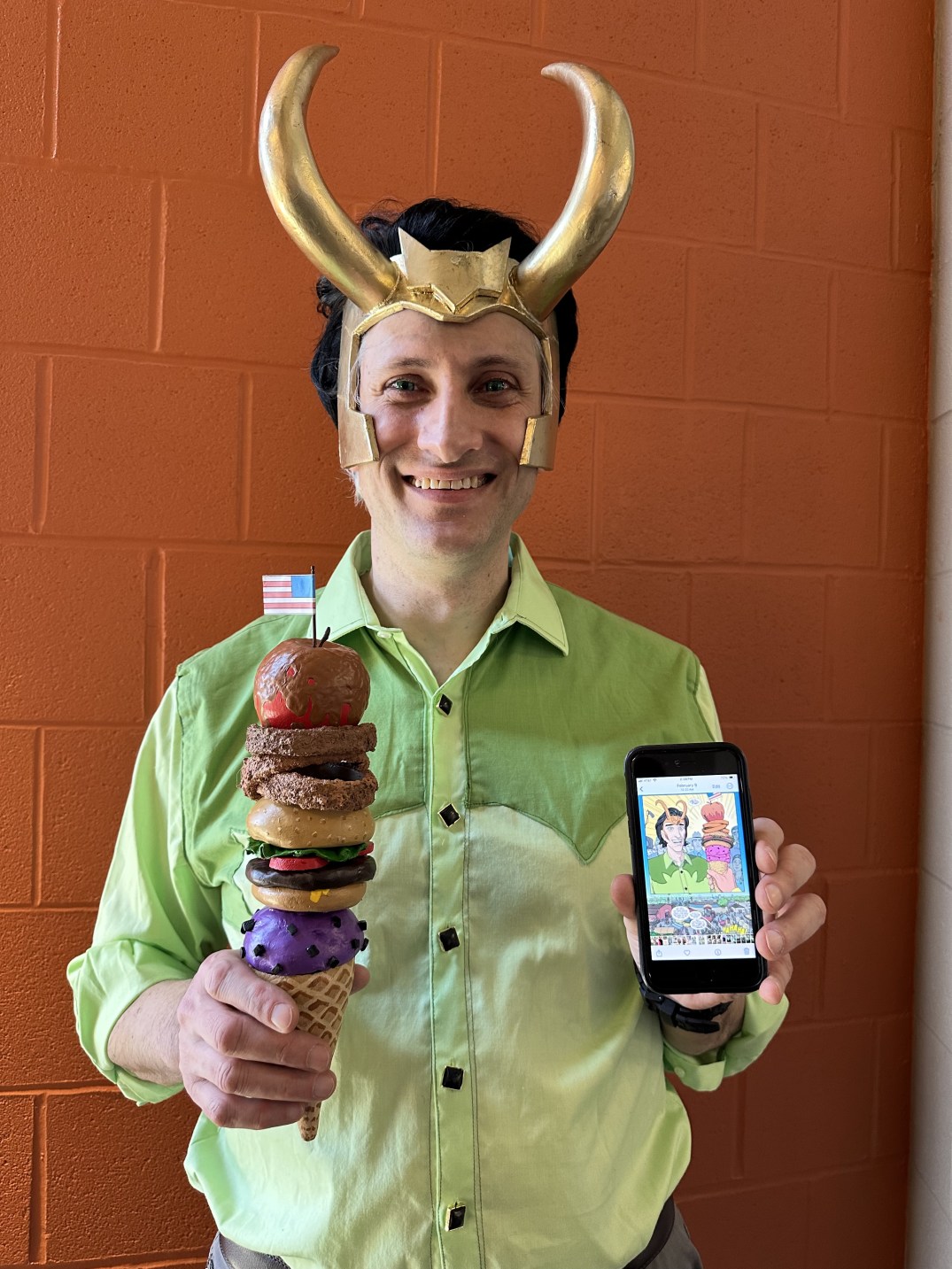
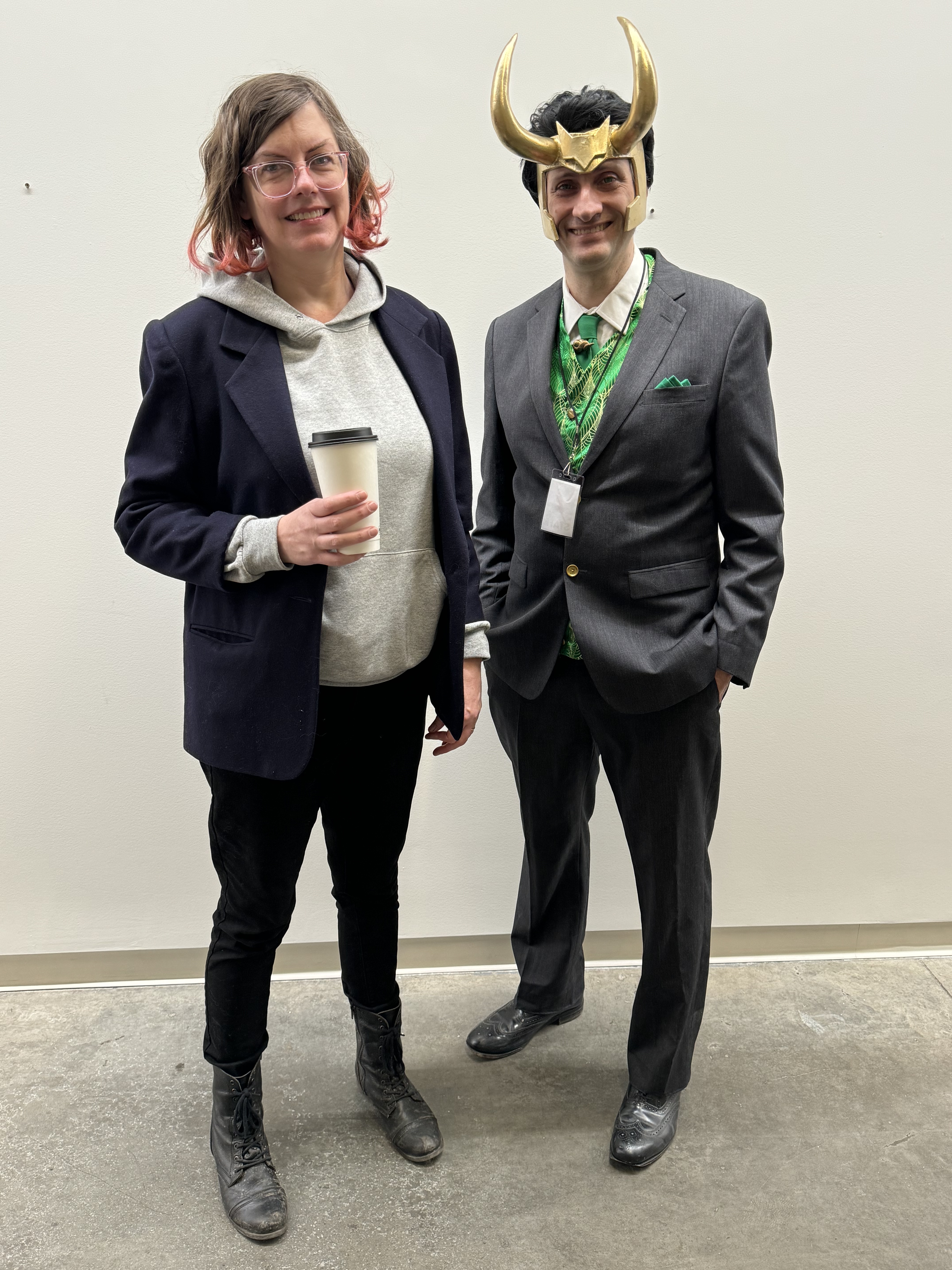
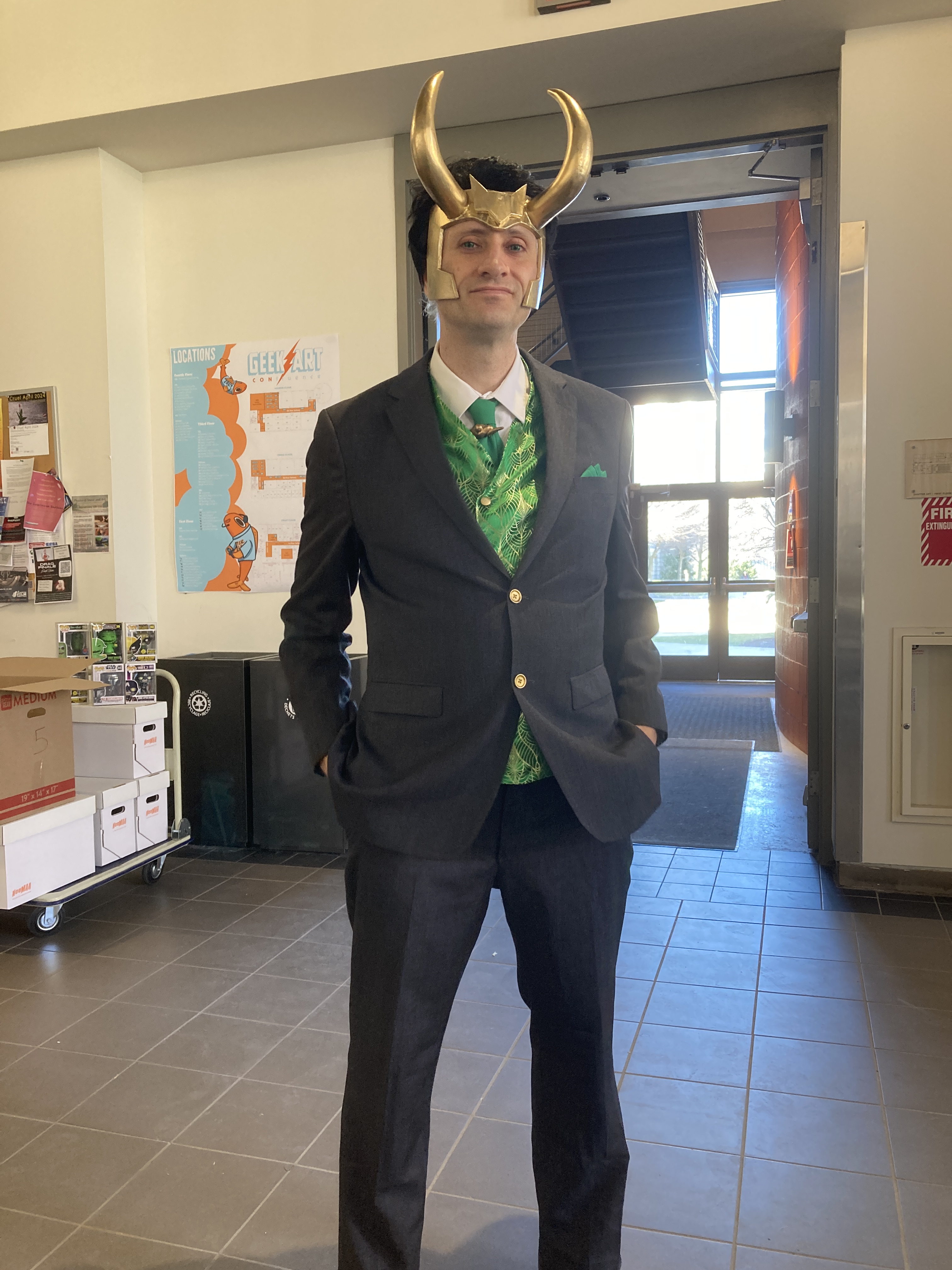
These are two cosplays based on the 2016 Vote Loki miniseries, which later inspired the look of President Loki, who appeared briefly in the far future in the MCU.

I will be playing with the idea of Variants–an MCU Loki concept–with these cosplays, adding to and changing them over time. I call these two looks “Suit Loki” and “Western Loki.” They are technically just different clothes for the same Loki as opposed to truly different Variants. Loki has a kind of complicated history in the last 10 or 15 years in the comics. There was standard Evil Loki, who died so he could be reborn and forgiven as Kid Loki, who sacrificed himself as well. Then we got teen Loki (born from a raven named Ikol who was actually the old Loki, sort of) in Young Avengers and Agent of Asgard, who became the God of Stories (and increasingly embraced gender fluidity). They then took a trip out of the timeline into the “present.” In-between then and the God of Stories’ recent reappearance, we got Vote Loki, a more adult version of Loki, who then continued on in other appearances (including a stint as Sorcerer Supreme). Currently, even more Variance has been happening with Loki in Defenders and Immortal Thor, with changes coming quickly enough that it’s not worth recapping at the moment except to say that they embrace recent evolutions and create even more.

All of which is to say that these Loki costumes will include a lot of Variants over time. A new accessory will be introduced for Suit Loki soon, and we’ll see other Variants as well.

This is my first cosplay with prescription colored contacts, and I was somewhat shocked how clearly I could see with them. Western Loki’s “ice cream plus” cone is one of my favorite things I have ever made (“By the Gods! What is this work of art?”).

Suit Loki only appeared on one page and Western Loki on three, with the SuperCone in a single panel.
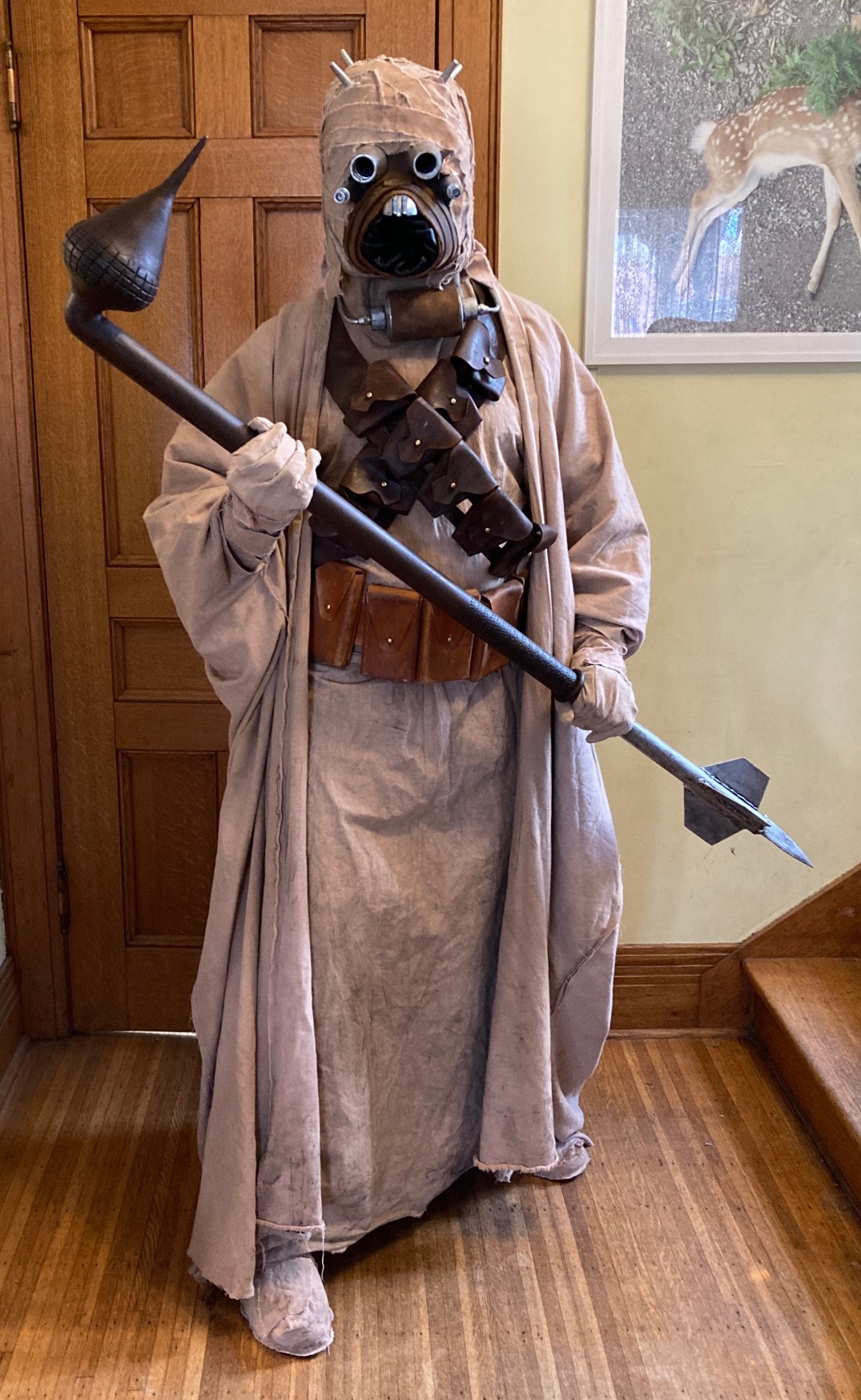
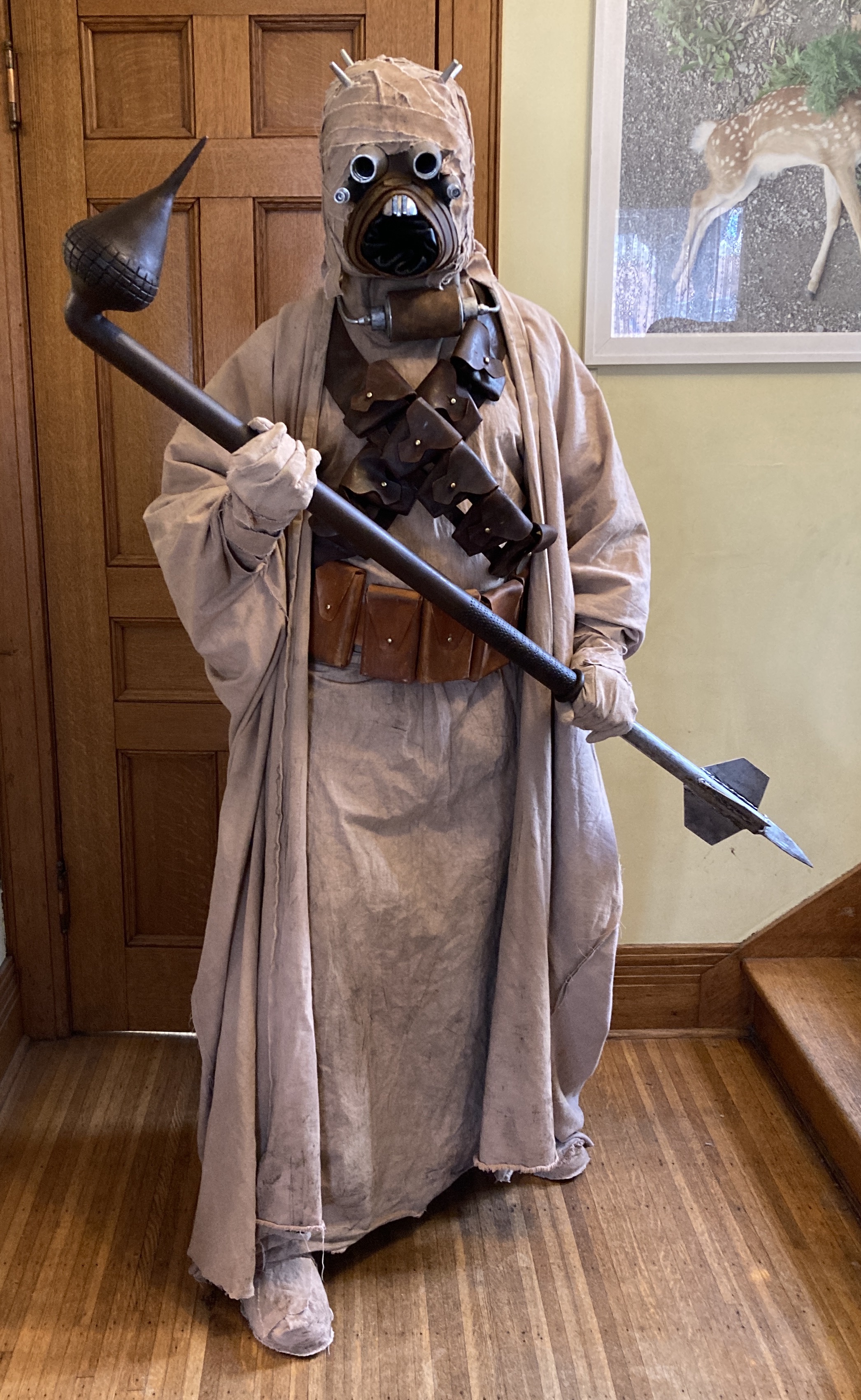
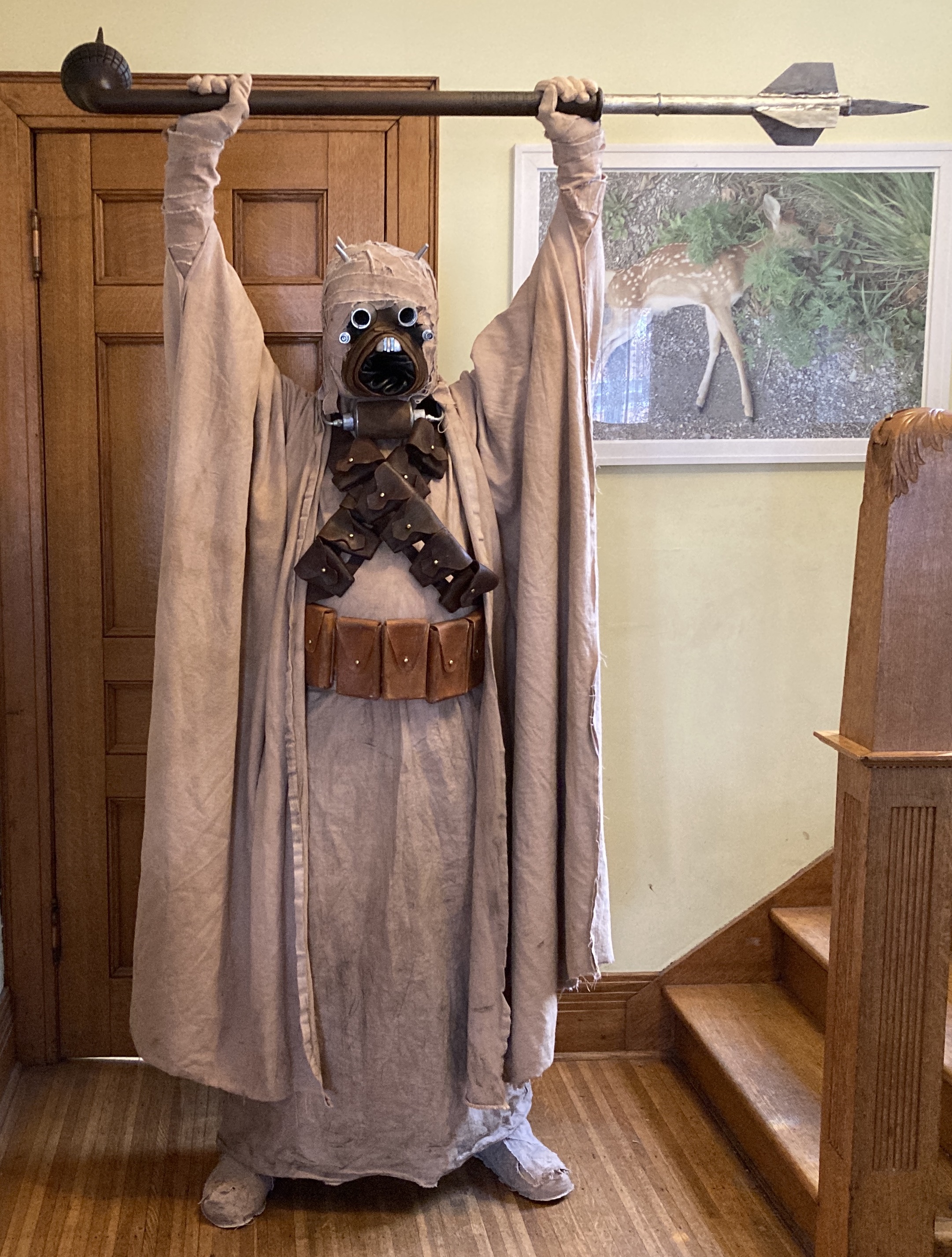
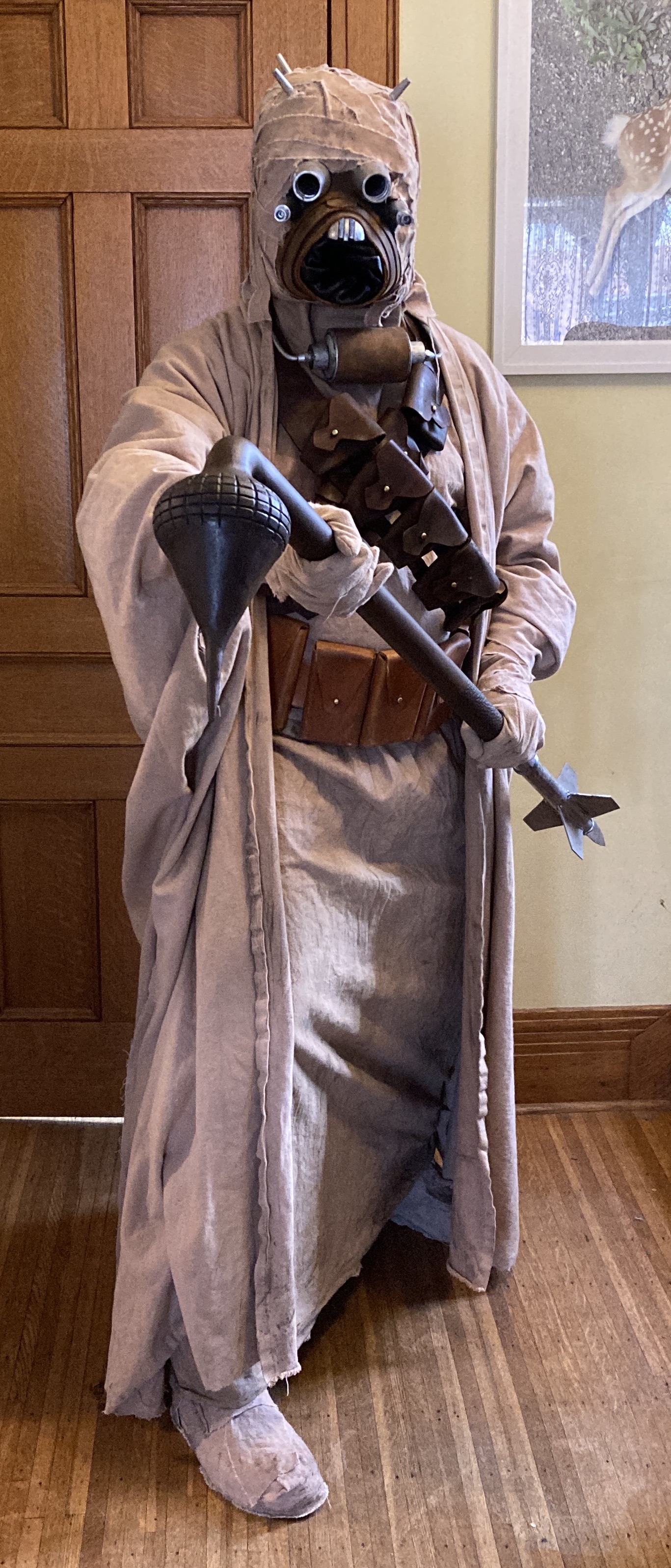
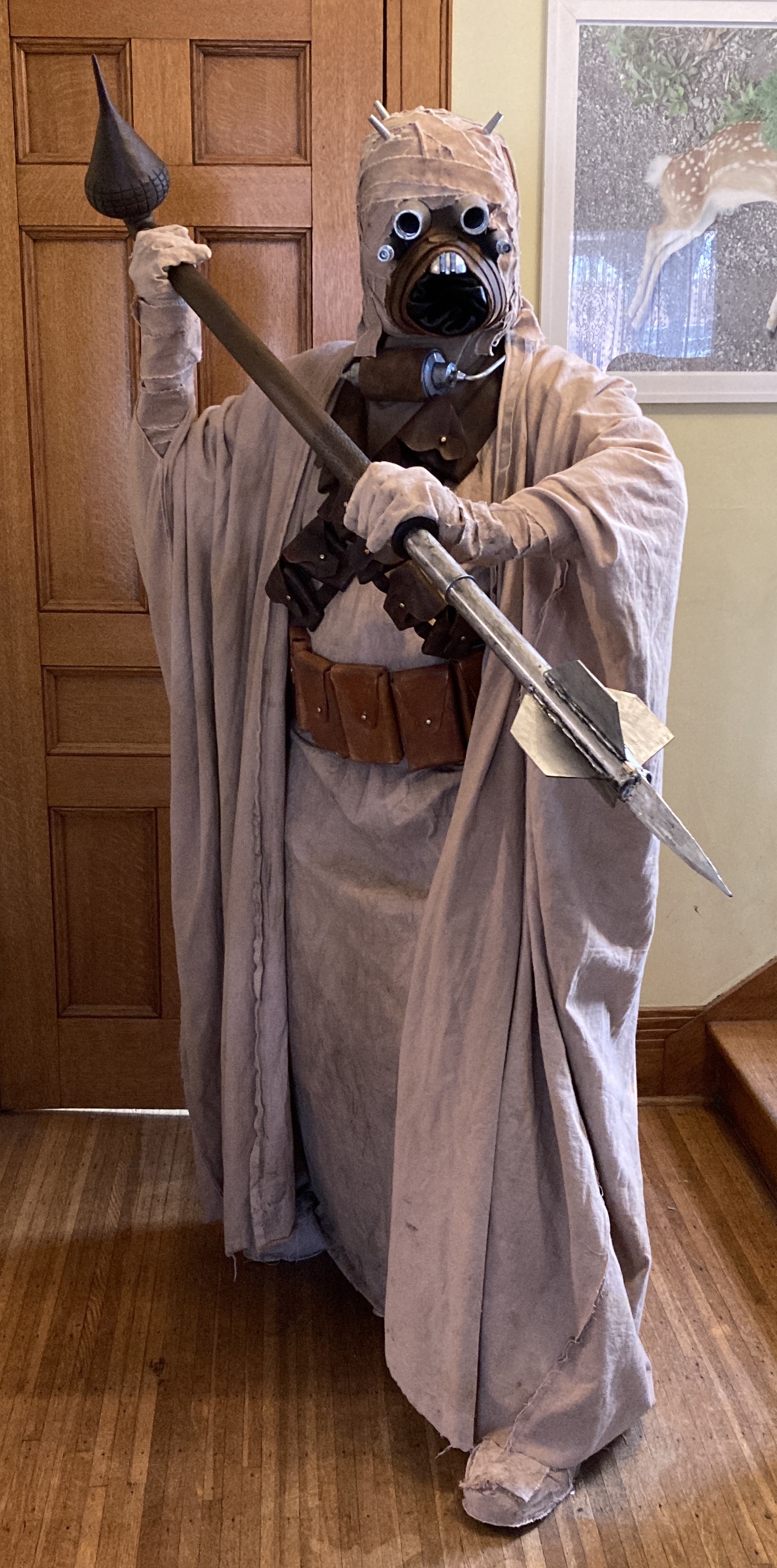
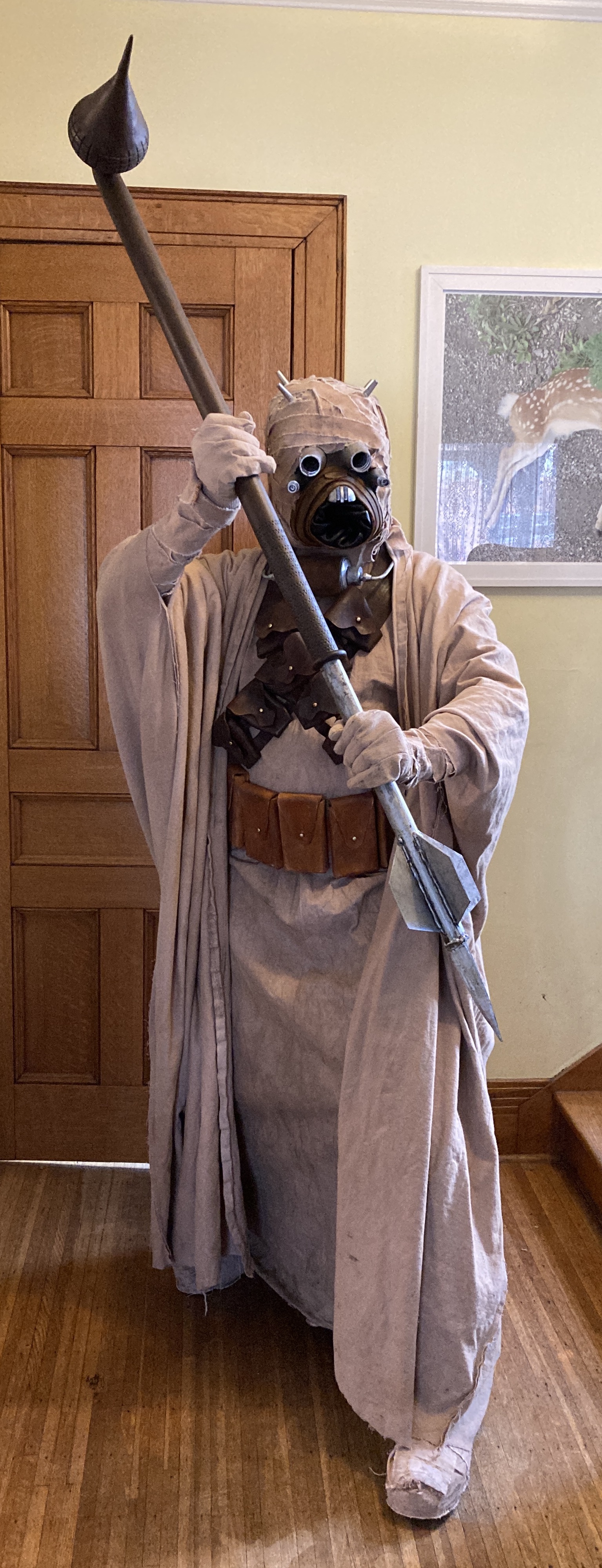
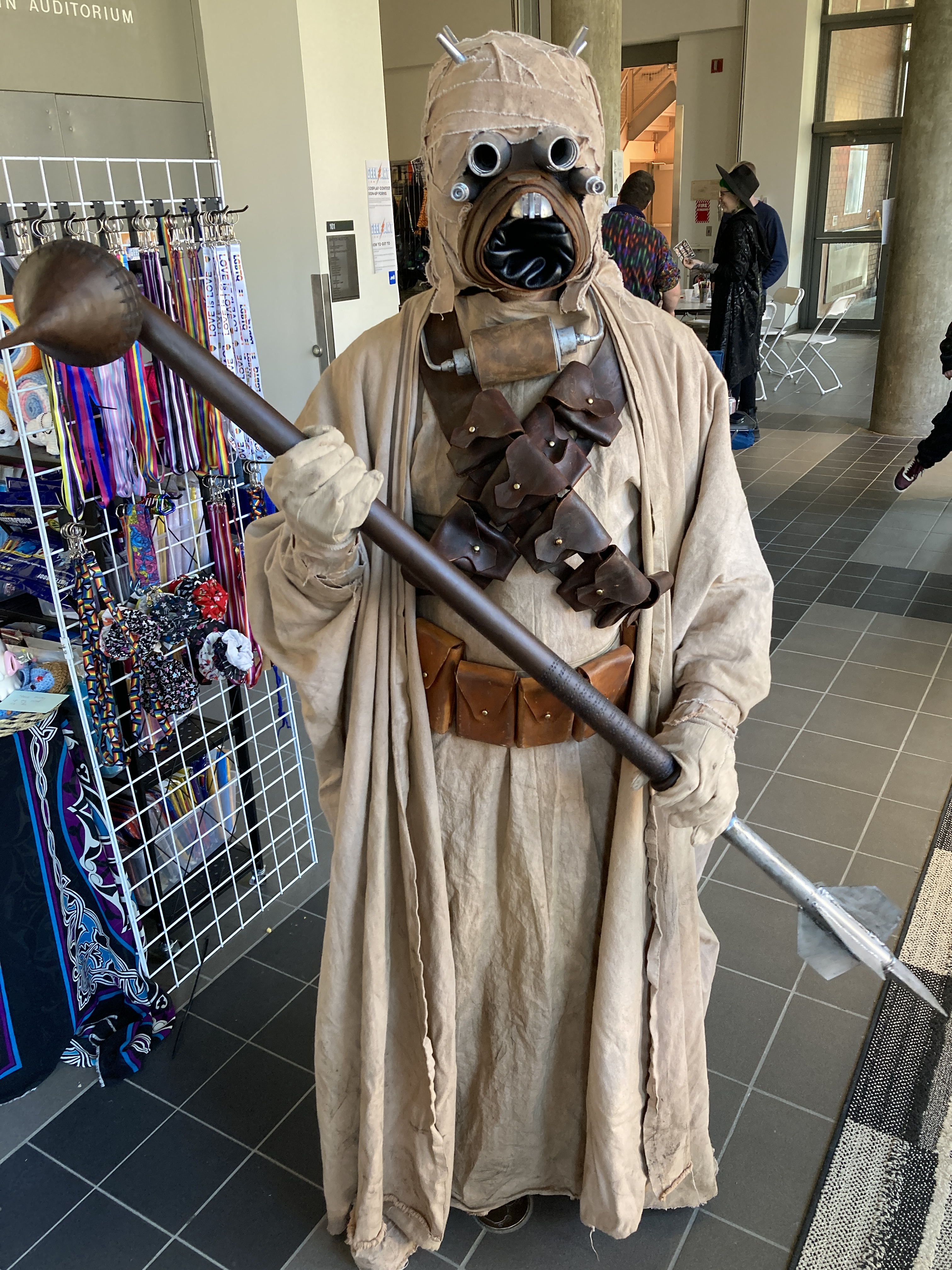
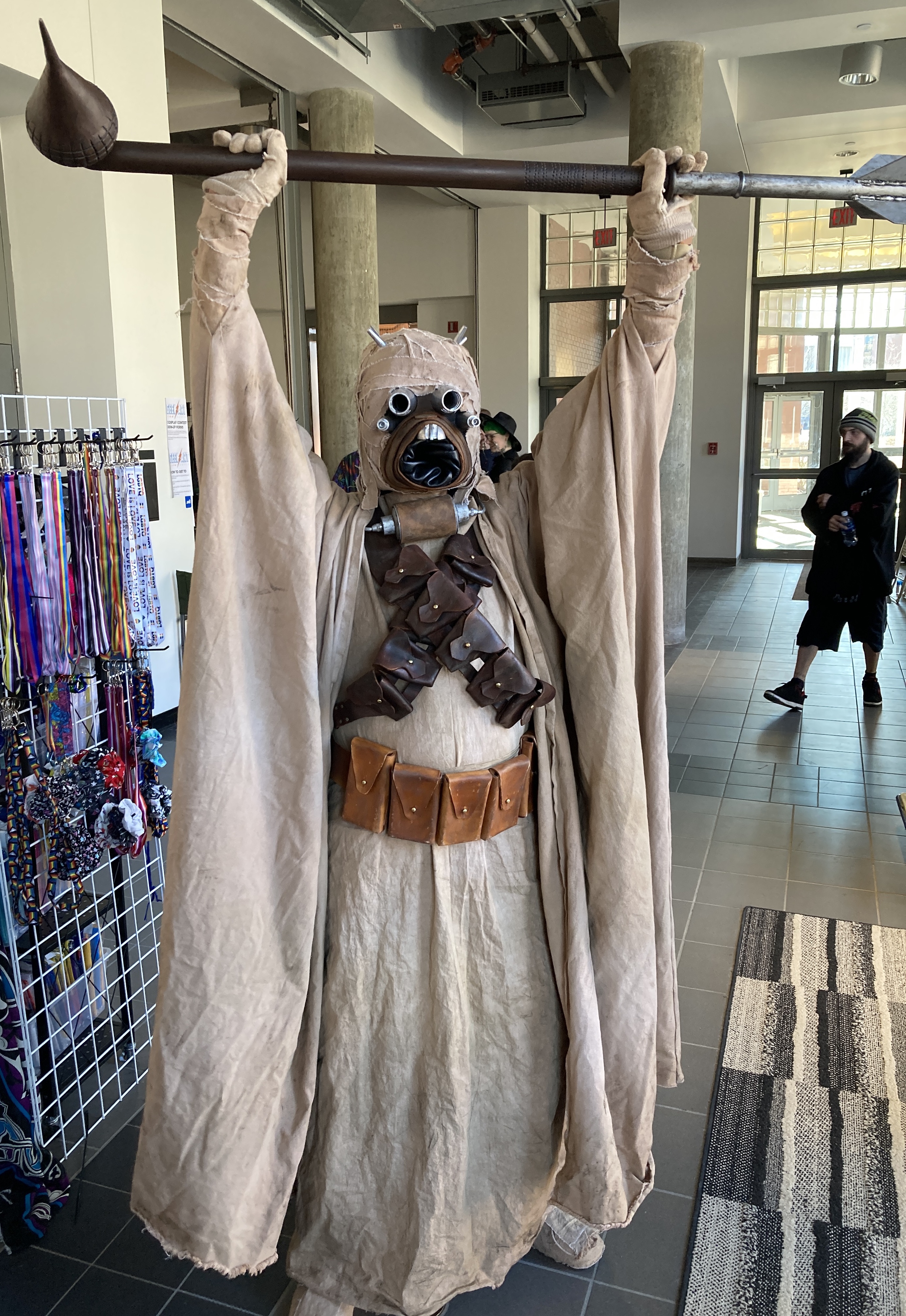
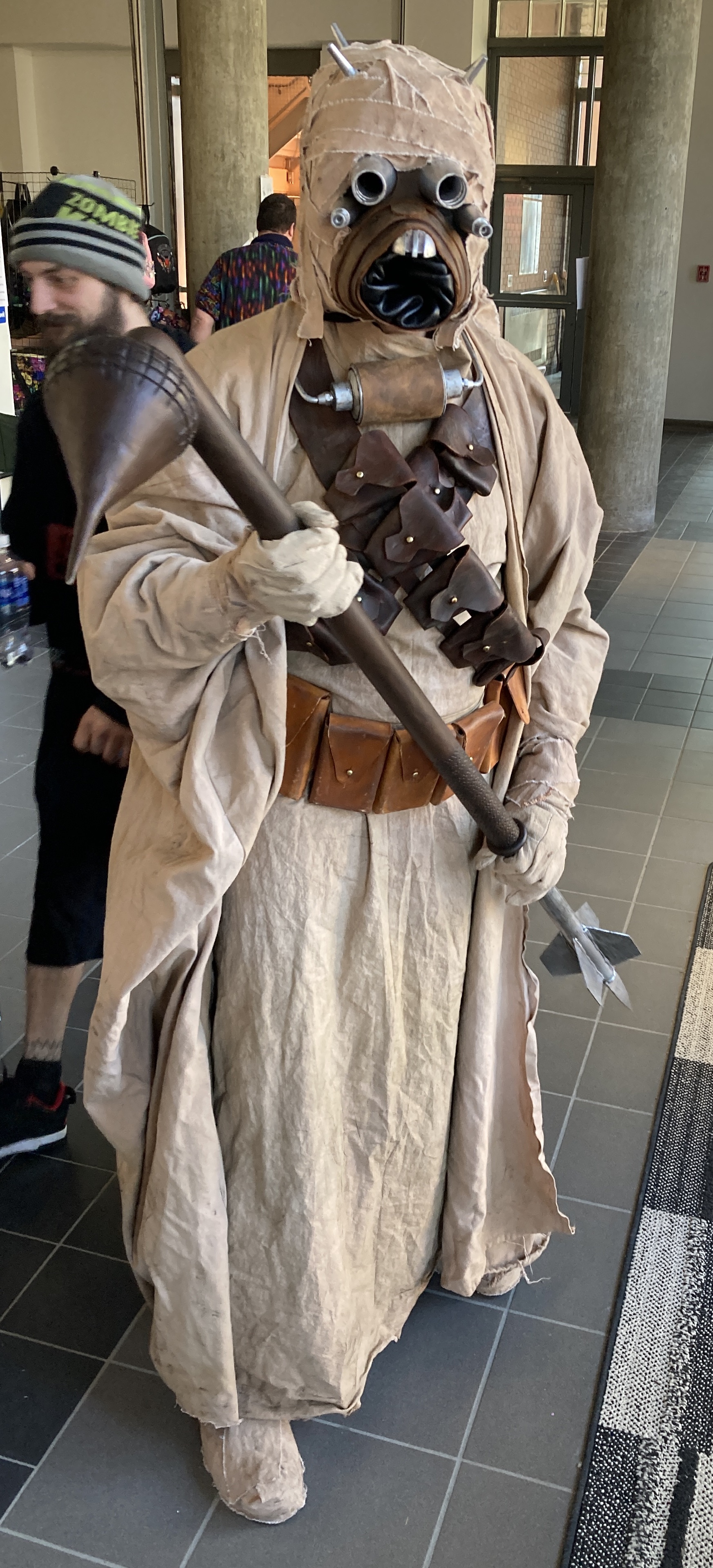
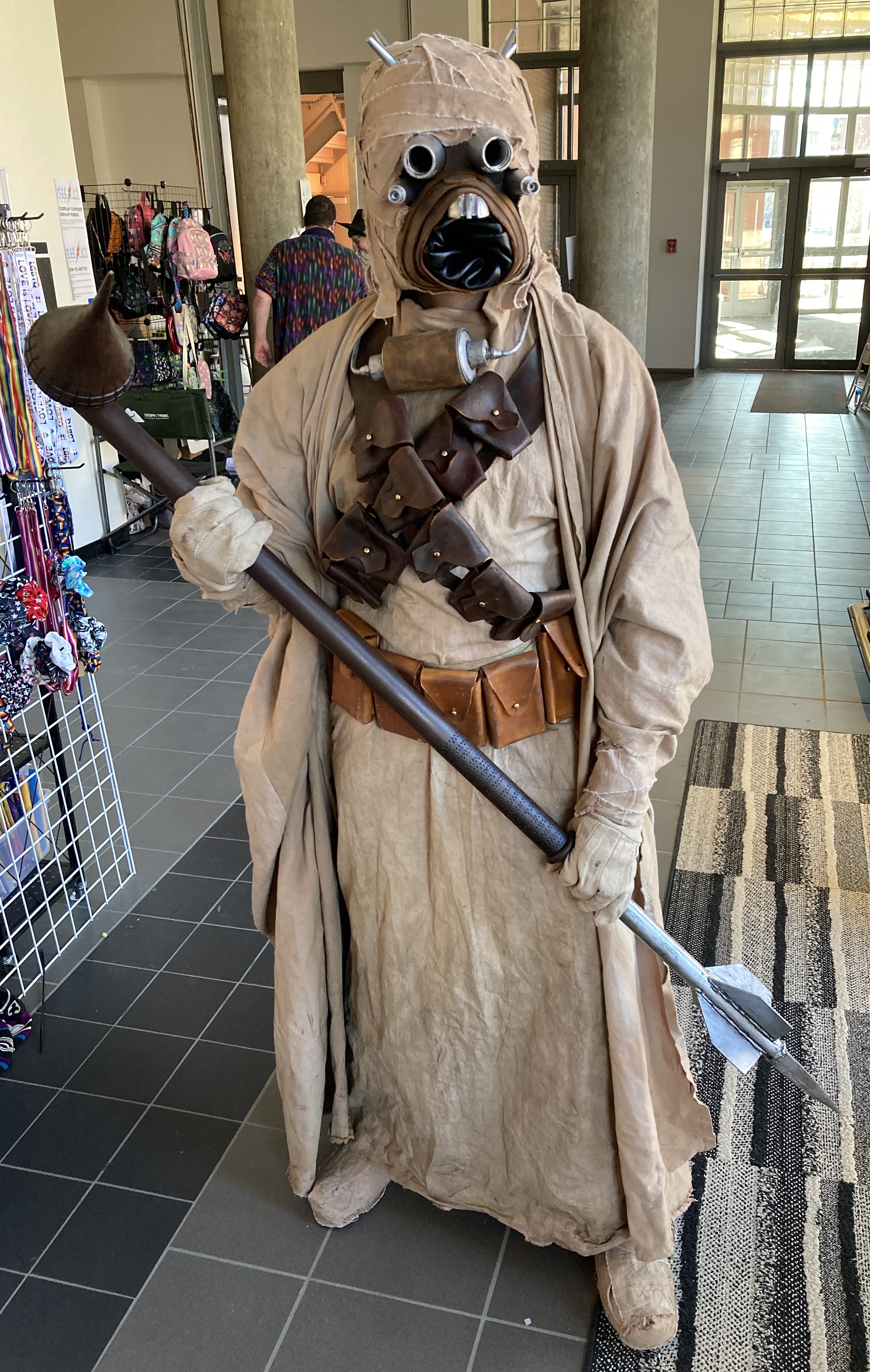
Tusken Raider cosplay

The A New Hope, male, version, if you’re interested.

I actually don’t have a huge explanation of this cosplay. It’s probably the most well-known character I’ve done in years, one that doesn’t require me to explain some weird continuity quirk or decades-long comic history. It’s just one of the Sand People who tried to kill Luke and steal R2 in the first Star Wars.

I started this thinking it was going to be relatively straightforward, but as with all costumes, it turned out to be more complicated than I thought. It’s scratch-built, including the leather bandoliers, except for the metal bits on the face, which are 3D printed from Thingiverse.

And no, I can barely see anything out of it. This has the worst visibility of any of my costumes.

If you are a stickler, you will note that the gaffi stick is slightly different in design from the most popular version in the movie, partly in the pineapple head design but also because the spike is a 3-sided pyramid, not 4-sided. Why? Well, as my son said, 3-sided blades are “better for war crimz.” So there’s that.

Or as the Tusken says, “Hraaaaaaaa…hruk hurk hruk hruk hruk hruk!”

2funBasTards: Sheep Races

2funBasTards is a performance collective with many members. Jason Lee, Tom Cranley, Justin Wood, Tom Bleigh, and Chris Wildrick took turns performing on this project.  This project was based on a previous solo project by Jason Lee.

Two 2funBasTards stood at opposite ends of a fenced-in course. The Broom BasTard had a broom and five hundred Black Sheep. The BlowerBasTard had a leaf blower and five hundred White Sheep. Each BasTard’s goal was to shepherd his Sheep to the other side of the course before the other BasTard got to his side. Each tool had its own strengths: the broom had precision, and the blower had power. The BasTards were allowed to not only shepherd their own Sheep, but also their opponent’s Sheep, which often led to a madcap battle in the center.

The two Barker BasTards provided color commentary on the race through their megaphones.

This performance was run many times over the course of a week.

2funBasTards: BasTard, Can You Spare a Dime?

2funBasTards is a performance collective with many members. Chris Wildrick, Tom Bleigh, and Tom Cranley were the performers for this piece.

2funBasTards was invited to participate in a show, GroupGroup, at the Commonwealth Gallery in Madison, Wisconsin, about collaborative art groups. However, the gallery charged a fee for the use of its space, and each group was asked to pay part of the fee.

2funBasTards decided to use their performance to raise enough money to pay for their part of the fee.

Jason built a money box with a glass front and a slot at the top. Tom Cranley went to the show’s reception with his cell phone. Tom Bleigh and Chris called in to his phone at regular intervals. When Tom Cranley got a call, he passed it off to a nearby gallery visitor, saying it was for them. Chris and Tom Bleigh then plied the gallery goer for money, asking them to donate whatever they liked for the sake of the show, just like an NPR listener.

Many visitors donated money, and 2funBasTards raised significantly more than they needed to pay the gallery’s fee. They gave the box, which had to be broken to be opened, to the show’s curator. He kept the box, unopened, and paid their share of the fee himself.


Earl: Videos

Earl is a collaborative duo consisting of Chris and his wife, Andrea Buckvold.

Earl made these three videos during graduate school. Time/Space Continuum Test #2 is missing. Earl continues to make books and other projects.

Time/Space Continuum Test #1: Jude Bude/Grape Fizz: Strange Gravity Attractors with an Imperfect Background Radiation (Hoop Ass) (1’19”)

Time/Space Continuum Test #3: Incidents and Evidence of Baryon/Lepton Orbital Simultaneity (Amino Acids/Insane in the Brain) (1’13”)

Time/Space Continuum Test #4: Outside the Map: Speculating Closed Universe Conundrums (Curve Ball/Swingers) (1’32”)

Earl: WØRD Search

Earl is a collaborative duo consisting of Chris and his wife, Andrea Buckvold.

The television personality Stephen Colbert actively cultivated a relationship with the contemporary artworld on The Colbert Report. For instance, he had his portrait painted every year; one version of this portrait was hung in the National Portrait Gallery, and another was altered by the acclaimed artists Andres Serrano and Shepard Fairey, and sold by the prominent auction house of Simon de Pury. In 2011, Colbert put out a request to all of his fans, asking for new portraits based on his previous portrait. He posted all the submissions on his website and featured selected portraits on the set of the show.

This is Earl’s portrait of Colbert. It is a word search where all the words are from “The WØRD,” a regular feature on his show. It is colored in patriotic red, white, and blue, with the white letters filling in the space occupied by his silhouette in his original portrait (seen below). Unfortunately, immediately after Earl submitted the image to Colbert’s site, he suspended the project, and it was never actually posted.

The image on the left is Earl’s WØRD Search, and the image on the right is Colbert’s original portrait.

Molecule Man Essay and Charts

I wrote this essay, “Analysis of the Molecule Man’s Costume, Face, and Character Across all His Appearances,” for Comic Vine.

The intent was to write a scholarly-style essay but “publish” it on a pop-culture site directly.

The essay also has three charts I designed as support materials:

Molecule Man Cosplay

Possibly my most-worn costume, this is the Molecule Man, Owen Reece.  Specifically, it is his costume from Avengers 215-216, where he created a costume for himself that intentionally looked a bit like Galactus’s costume.  I chose this particular costume because it’s Reece’s best hat.

Here is the build thread on the RPF.